Montana State University
Academics | Administration | Admissions | A-Z Index | Directories

Montana State Universityspacer Mountains and Minds
MSU AcademicsspacerMSU AdministrationspacerMSU AdmissionsspacerMSU A-Z IndexspacerMSU Directoriesspacer


Contact Us
Department of Physics
Montana State University
P.O. Box 173840
Bozeman, MT 59717-3840

Tel: (406) 994-3614
Fax: (406) 994-4452
Location: EPS building, Room 264


Department Head:
Prof. Richard J. Smith
Homepage


For suggestions or corrections to the Web site, email the
Department of Physics

WELCOME to the Department of Physics. The Department is committed to education and research in physics, the study of the fundamental universal laws that govern the behavior of matter and energy, and the exploration of the consequences and applications of those laws... continued

Latest News:

Colloquium, Friday November 20th
Prof. Dan Reisenfeld, Department of Physics and Astronomy, University of Montana. "Global Observations of the Interstellar Interaction from the Interstellar Boundary Explorer-IBEX"
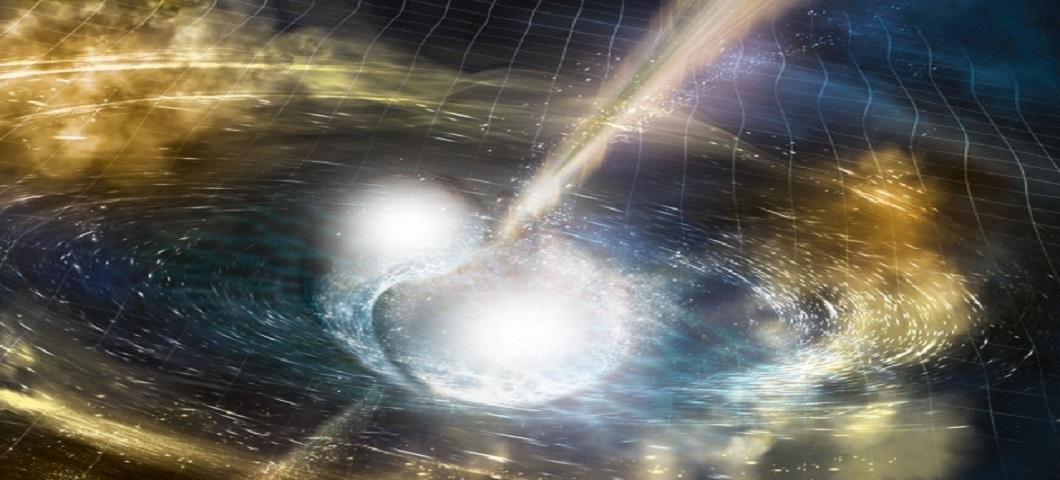
 NASA has awarded a three year, half million dollar grant to Associate Professor Neil Cornish to develop analysis techniques for the future Laser Interferometer Space Antenna (LISA). The LISA mission will open up a new field of astronomy by observing low frequency gravitational waves from the collision of massive black holes and other violent astrophysical events. Cornish has been a member of the LISA science team since 2005, and his group is at the forefront of research in the field of gravitational wave astronomy. Congratulations, Neil!
Dick Smith (10/23/09)
Communicating science to the public: Greg Gabrielsen, a graduate student from Chicago, Silvina Guidoni, a graduate student from Argentina, and Jayson Nissen, a junior from Havre, were among the 20 students accepted into "Communicating Science to the Public," an eight-week seminar series sponsored by the Montana Space Grant Consortium and MSU Extended University. Over the eight-week span of the project, students will learn about various strategies for communicating science, including: public presentations, new technologies, writing, working with the media, etc. The students will also be creating digital multimedia exhibits about their research, which will remain permanently available to the public in BTC Studio 1080. We look forward to the public presentations which the students will give later this semester. For more information see: Http://eu.montana.edu/CommSci.
Dick Smith (10/19/09)
SSEL's two MISSE-6 active experiments have begun their journey home after approximately 18-months in space on the "back porch" of the Columbus module on International Space Station. In a few short weeks we will finally begin to realize an outcome of this investigation that started 5-years ago. Read more...
(09/04/09)
Measurements of the stochastic gravitational wave background offer the possibility of probing alternative models of early Universe cosmology. Professor Neil Cornish and members of the LIGO and VIRGO collaborations discuss the possibilities in a recent Nature article.
(08/28/09)
Members of the Space Science and Engineering Lab (SSEL) recently traveled to the Black Rock Desert, north of Reno, NV, to test magnetometer components for the SpaceBuoy satellite project currently underway at MSU under AFOSR and MSGC support. Read more...
Dick Smith (08/24/09)

The Interface Region Imaging Spectrograph (IRIS)
Congratulations to Charles Kankelborg, Dave Klumpar, and the entire SSEL team at MSU for their parts in attracting NASA support for the IRIS project. Understanding the interface between photosphere and corona remains a fundamental challenge in solar and heliospheric science. IRIS fills a large gap in our knowledge of the solar atmosphere by tracing the flow of energy and plasma through the chromosphere and transition region into the corona using spectrometry and imaging in three ultraviolet windows. The unprecedented combination of high angular resolution, short temporal cadence, good spectral resolution, and high-speed data transmission will provide information critical to understanding the lower boundary of the heliosphere as well as fundamental astro- and plasma-physical processes. IRIS is a NASA small explorer mission ($105M) that completed a phase A concept study in December 2008 and was recently selected by NASA to continue into the hardware phase. The IRIS Program is led by Lockheed Martin with Alan Title as PI. The Smithsonian Astrophysical Observatory (SAO) will provide the telescope and participate in science and education/public outreach (EPO). Montana State University (MSU) will participate in the uv spectrometer design, will specify, procure, and test the spectrometer optics, will participate in the integration and test of the spectrometer at Lockheed Martin in Palo Alto, will participate in the science and EPO. MSU will also provide the Gegenschein Imager (GI) instrument, as a student collaboration if funding is available.
Read MSU News Service story here...
Dick Smith (07/24/09)

View Text-only Version Text-only Updated: November 18, 2009
spacer


QUICK LINKS

Local Users:
Calendar
Colloquium Schedule
Current Classes
Graduate Manual
Learning Center
Physics Email
Latest Newsletter
SPOT
Webpage Update

MSU:
Calendars
MyInfo MYINFO Login
MyMSU Portal MyMSU Portal Login
Desire2Learn Login
Student Gmail Accounts
Faculty Activity Database
Proposal Clearance Form
MSU Today
Course Catalog

Visitors:
Scholarships
Job Opportunities
Graduate Brochure
REU program - Solar
REU Program - CM/LASER
Course Catalog
Visitor Information Links
Campus Tour
Campus Map

Fun and Careers:
Astronomy Picture of the day
NASA's Messenger
MSU Weather Station
MSU Webcam
Job Opportunities

APS Career Center

Physics Today Jobs


spacer spacer
© Montana State University 2006 Didn't Find it? Please use our contact list or our site index.