

Department of Physics Newsletter - Issue 1
Greetings! We are pleased to introduce this newsletter, which will be published at the end of each semester. It will be available on our webpage and through a mailing list; you may opt out of the mailing list if desired. A small number of printed copies will be available as well. We hope that you enjoy learning about some of our research, educational, and curricular activities along with the latest dissertations, defenses, and successes of our undergraduates. There are even two physics questions to stimulate your skills. If in Bozeman, contact us for a tour of the department. Please stay in touch!
John Neumeier, Physics Department Head
Research Highlight: Li He and The Engineering Light-Matter Interactions at Nanoscale
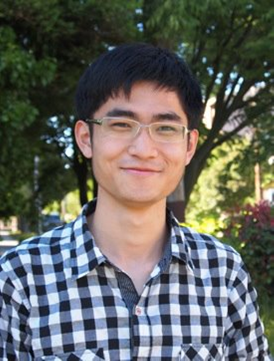
Li He
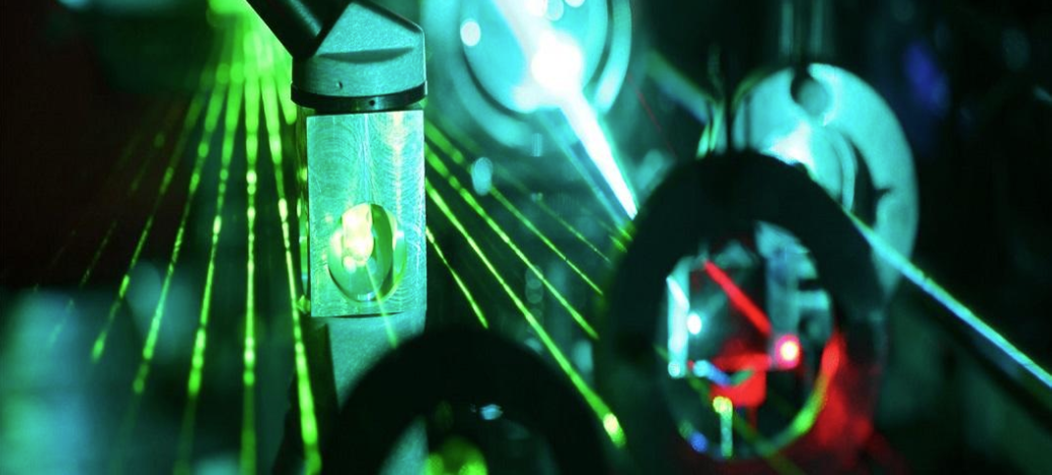
Recent research conducted by Assistant Professor Li He, featured on the cover of Physical Review Letters, introduces a novel platform for ultra-efficient computing by engineering interactions between photons. By confining photons within a photonic crystal nanocavity and coupling them to excitons (electron-hole pairs) in atom-thin quantum materials, the researchers created hybrid particles known as exciton-polaritons. These particles maintain the speed of light while exhibiting matter-like interactions and achieve optical nonlinearity at a scale of approximately 1,000 photons.
This milestone serves as the foundation for a new research program at MSU. Based in Barnard Hall, the lab is currently pushing these interactions toward the single-photon limit, where individual photons can perform logic operations. By leveraging the MonArk Quantum Foundry and MSU’s institutional expertise in integrated photonics, the team aims to translate these mediated interactions into scalable nanophotonic circuits. This work is essential for developing next-generation hardware, ranging from high-speed photonic AI accelerators to scalable photonic quantum processors, all of which would operate at the ultimate limit of energy efficiency.
Faculty Highlight: Jayson Nissen
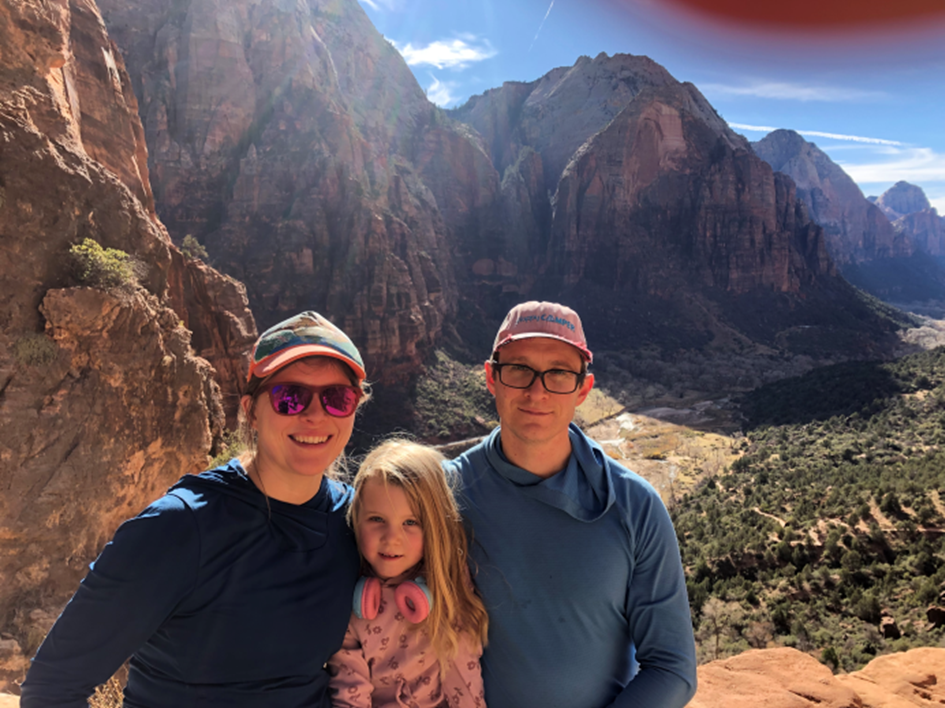
Jayson Nissen and family
Dr. Jayson Nissen is excited to return to Montana State University, where he completed his undergraduate degree in physics in 2010. After earning his Ph.D. from the University of Maine, his work has focused on improving student-learning in introductory STEM courses through research-based instructional practices.
Jayson’s research centers on developing tools and infrastructure that allow instructors to better understand and respond to student learning in real time. For the past decade, he has co-directed the LASSO platform, a national system that supports educators in administering and interpreting research-based assessments. With over $5 million in support from the National Science Foundation, LASSO has enabled large-scale studies of teaching and learning across hundreds of institutions.
At MSU, Jayson teaches the introductory honors physics course and graduate teaching course. His research works with teachers to develop fine-grained, formative assessments that help instructors personalize instruction and support student success in gateway courses. He is particularly interested in how these tools can make high-quality, evidence-based teaching more accessible at scale.
Outside of work, he has been skiing, biking, and climbing with his wife and daughter in the same places he first learned these sports as a student at MSU.
Outreach and Solar Physics: Deven Chedalawada and SWUG
Rachael Filwett, Assistant Professor
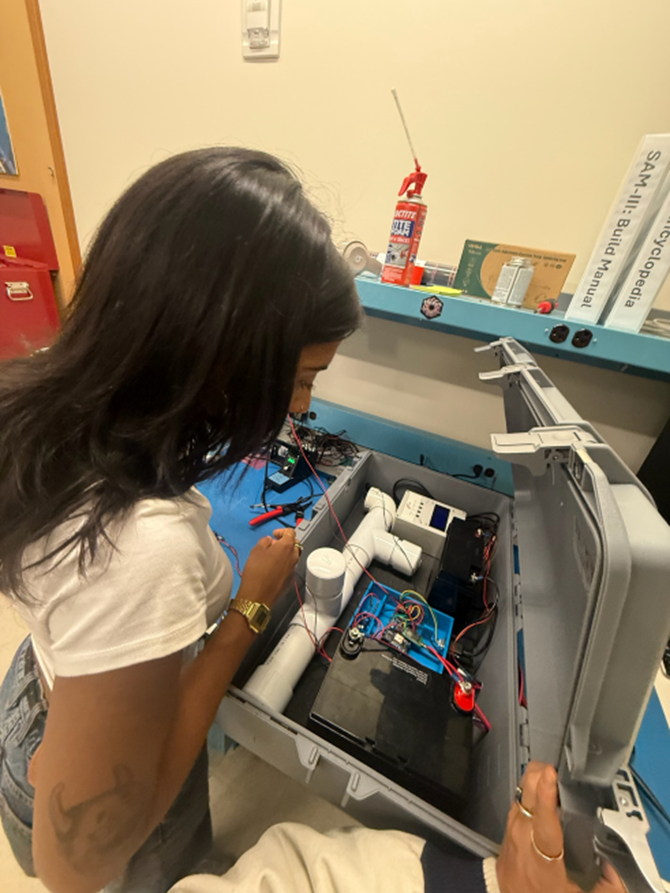
Deven in the lab
Deven Chedalawada (May 2025 graduate) has continued to work in the department as Assistant Professor Rachael Filwett’s Project Manager for the Space Weather UnderGround (SWUG) outreach and magnetometer deployment program. SWUG is a program funded by Filwett’s NSF CAREER award, and looks to bring the concepts of heliophysics into Montana high school classrooms by providing education and curriculum resources to high school science teachers. The program looks to expand knowledge of heliophysics in the state by pairing schools and teachers with a science-quality magnetometer. While completing her undergraduate degree, Deven took interest in the experimental side of physics research. Deven completed her senior capstone project on aspects of building the SWUG ground-based magnetometers, and her dedication to the work has enabled the full deployment and further construction of more instruments. Deven has helped build the SAM III magnetometers and has also created the electronics relay and solar power charger, which will continuously power the instruments. The instruments will send and upload their data to MSU’s secure data hosting site via radio wave connection at each high school participating in SWUG. This magnetometer data will be used to study small- scale geomagnetic induced currents across Montana, which will help inform local power and gas companies on the local space weather risks. While working with Dr. Filwett, Deven has been able to pursue her passion for both instrumentation design and scientific outreach through the SWUG program.
Grant Highlight: CAREER Award Goes to Hang Yu
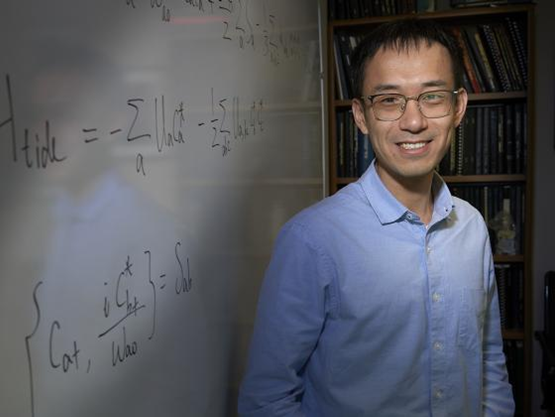
Hang Yu, Assistant Professor
Hang Yu, an assistant professor in the Department of Physics at MSU, has been awarded the National Science Foundation’s CAREER award for a five-year study of binary neutron stars. Binary neutron stars are pairs of extremely dense stars gravitationally bound to one another and coalesce as they emit gravitational waves. The gravitational wave waveforms reveal nuclear physics at extreme densities as the neutron stars are tidally deformed by each other's gravity, exhibiting nonlinear hydrodynamical signatures that Yu will model through theoretical investigations. His study incorporates strong gravitational science, theoretical astrophysics, and nuclear physics, and will be significant for all three fields. “We will provide to the community, I would say, the most accurate gravitational wave waveform model for neutron stars that can really be used to test neutron star physics to accuracy,” Yu said. “None of the previous models can achieve that.”
The CAREER award will also support an outreach project in Montana’s GEAR UP schools for teacher training, which will further help middle school and high school students in rural areas prepare for post-secondary education.
Graduate Student Highlight: Genevieve Nelson
The smallest building block of software is called a “bit,” represented by a “1” or a “0.” The corresponding piece of hardware is a transistor, a switch that defines whether that bit is “on” or “oE.'” The first patent for a transistor-like device was issued in 1928, yet the modern smartphone contains 15-20 billion transistors. Countless scientists catalyzed this explosion of technological development by examining the behavior of electrons and ions in solids to understand their quantum nature at the most foundational level. Whether it be 1928 or 2028, the same principle rings true: the research questions being tackled today will determine the technological trajectory of the future.
My work on lithium purple bronze (Li0.9Mo6O17, LiPB) continues to deeply investigate the quantum nature of solids. LiPB has a unique quasi-one-dimensional structure which forces most conduction electrons to flow along the crystallographic b-axis; electrical conductivity is much lower in the perpendicular dimensions [1]. Some LiPB crystals superconduct at TC ~ 2 K, yet slight variations in chemical makeup cause other crystals to be non-superconducting. LiPB is metallic from room temperature until Tmin ~ 28 K, when an unexplained upturn in the resistivity causes a crossover to insulating behavior. Several phenomena could be responsible for this up-turn, including charge- and spin-density wave (CDW and SDW) order and electron localization due to lattice disorder, yet no consensus exists on the nature of the crossover.
My research integrates an international crystal growth collaboration, state-of-the art neutron scattering facilities, and high-precision thermal expansion measurements to search for the source of the mysterious upturn. For the past 9 months, Ariana de Campos and Mário da Luz from Univesidade de Federal do Trîangulo Mineiro in Uberaba, Brazil have spent their sabbatical at the Neumeier Laboratory at MSU laboring to perfect LiPB crystal growth techniques. These efforts have increased the maximum size of the crystals fivefold, from ~ (1-2 mm x 1 mm x 0.5 mm) to (8-10 mm x 5 mm x 0.5 mm). Using larger crystals significantly reduces the diEiculty of and uncertainty associated with many measurements and is a vital step in discovering the nature of the resistivity upturn.
In November 2025, I traveled to Oak Ridge National Lab, TN, to perform the first ever bulk neutron scattering measurements on two crystals of LiPB, one superconducting (SC) and one non- superconducting (NSC). Two undergraduate MSU students, Madeline Lamb and Andrea Astorga-Bedoya, performed electrical resistivity measurements to create an extensive inventory of over 200 crystals to find the best candidates for this study. Neutron scattering is the best method for finding evidence of SDW in bulk materials, yet neither the SC nor the NSC crystal showed any evidence of SDW order, providing a strong indication that an SDW is not the source of the resistivity upturn in LiPB.
This summer, I will mentor and collaborate with Sarah Monkman, an MSU Undergraduate Scholars Program award recipient, to use one-of-a-kind, high-precision capacitive dilatometer cells to measure the thermal expansion of LiPB and search for evi dence of CDW order. The Neumeier Laboratory at MSU has developed two unique cells, one of fused silica and one of single-crystal sapphire [2, 3]. Each cell is handmade at MSU and can detect length changes with 0.1 Å resolution, a relative resolution 1,000 to 10,000 times higher than diffraction techniques. Although previous studies suggest that a CDW is not present in LiPB, all of these were performed on much smaller crystals than we now possess. Given the large crystal sizes and the incredible precision of the instruments, this project offers the best opportunity to determine if a CDW could be present in LiPB.
These endeavors to uncover the mechanism responsible for the upturn in the electrical resistivity of LiPB strike at the root of an anomaly that has mystified the condensed matter community for almost 40 years. By gaining a deeper understanding of the collective behavior of electrons in LiPB, we grow our overall knowledge of quantum mechanical systems and obtain insights that will contribute to the technological advancement of the coming century. Through international collaboration, precision instrumentation, and the creative contribution of undergraduate students, graduate students, and faculty, condensed matter research at MSU continues to probe the deep mysteries of fundamental physics.
[1] M. Onoda, K. Toriumi, Y. Matsuda, and M. Sato, Crystal structure of lithium molybdenum purple bronze Li0.9Mo6O17, J. Solid State Chem.; (United States) 66:1,10.1016/0022-4596(87)90231-3 (1987)
[2] J. J. Neumeier, R. K. Bollinger, G. E. Timmins, C. R. Lane, R. D. Krogstad, and J. Macaluso, Review of Scientific Instruments 79, 10.1063/1.2884193 (2008).
[3] J. J. Neumeier and G. A. Nelson, Review of Scientific Instru ments 93, 063903 (2022)
Recent Ph.D. Dissertations (Spring 2026)
Adam Healy, Graduate Coordinator
The following students successfully defended their PhD Dissertations this Spring
Joseph Bretz
Title: Probing the extreme physics of neutron stars: magneto-elastic oscillations of magnetars
and tidal resonances in binary mergers
Advisor: Hang Yu
Katherine Bruce
Title: Neutron Stars Across Scales: X-ray Spectral Studies of SAX J1808.4-3658 and Thermal
Evolution of Hyperon-Mixed Cores
Advisor: Anne Lohfink/Sachiko Tsuruta
John-Michael Eberhard
Title: Active Galactic Nuclei and Intense Star Formation in Dwarf Galaxies: A Study in
the Radio and X-ray Regimes
Advisor: Amy Reines
Joseph Stage
Title: Quantum States of Light in Hybrid Nanophotonic and 2D Material Systems
Advisor: Nick Borys
The Lorraine Foley Hargrove Women in Physics Scholarship
John Neumeier, Department Head
In Spring semester 2025, the Physics Department received a donation from JP Hargrove (MSU Physics ’72) in memory of his wife Lorraine, a Butte native. Lorraine was a very social person and outdoors enthusiast. She also possessed a sense of adventure, even skydiving to cele brate her 50th birthday! The Lorraine Foley Hargrove Women in Physics Scholarship is intended to encourage young women to follow their passion in science and life, while also being community minded and giving back through volunteering (and to have a little fun with her family, who are mostly UM supporters). JP’s donation establishes an endowment through annual gifts of $100,000 that are expected to exceed $1,000,000. Many thanks to JP!
Physics B.S. Degree Awardees Spring 2026
Milo Anderson
Andrea Astorga Bedoya
Kyle Burke
Akasha Evans
Owen Gibbs
Sarah Heller
Sierra Holleman
Derek Jollie
Madeline Lamb
Bergen Miller
Piper Morris
Jerry Nye
William Patrick
Nolan Poncin
Jesse St. Onge
Samuel Williams
Scholarship Recipients (2025/2026)
Georgeanne Caughlan Memorial Scholarship ($1,060)
Madeline Lamb
John and Marilyn Asbridge PHYS Scholarship ($5,800)
Derek Jolie, Sarah Heller, North Sanderson, and Aspen McKee
Paul T Schnackenberg Scholarship ($4,000)
Avery Barbee, Poppy Strachan, Liam Schimmelman, and Osayd Bhutta
Physics Scholarship ($4,500)
Dakota Russell, Eleanor Gentry, and Sophia Owens
Ray E Birkett Scholarship ($520)
Bridger McGimpsey
Robert J. Swenson Memorial Scholarship ($1,350)
Athmay Anatha
Robert J. Swenson Undergraduate Research Fund ($1,160)
Adeline Kirby
Ronald Braff Memorial Scholarship ($1,060)
Isabel Besel
The Mac Rugheimer Memorial Scholarship ($1,400)
Milo Anderson
Curriculum Development Update
Our Undergraduate Curriculum Committee is composed of one undergraduate student, one staff member, and professors Carla Riedel (chair), Anne Lohfink, Brian D’Urso, and Paul Rugheimer. Over the last few years, it has been busy improving the curriculum for our four B.S. degree options and the physics minor to enhance student skills in computational physics, streamline the curriculum, reduce non-physics electives, and standardize course descriptions and learning outcomes.
We have added a new, required course for all degree options for Spring semester of the freshmen year: Solving Problems with Python (PHSX 256), designed by Brian D’Urso and Anne Lohfink. Laboratory Electronics I (PHSX 261, now 4 credits) now contains all the coverage of analog electronics, so that the elective Laboratory Electronics II (PHSX 262) can focus on digital electronics. Mathematical Methods in the Physical Sciences (PHSX 301), is now offered in both Fall and Spring semesters to better serve the needs of both physics majors and minors. Methods of Computational Physics (PHSX 331) will take advantage of PHSX 256 and cover more advanced topics than it had. Electricity and Magnetism I and II (PHSX 423 and 425) have been reorganized so that PHSX 423 covers all four of Maxwell’s Equations and introduces electromagnetic waves. Graduate-level Computation al Physics (PHSX 567) is being redesigned by Charles Kankelborg for co-convening as an undergraduate course, to provide physics majors up to 3 computational courses during their studies. Finally, to enable more choice for students who wish to concentrate on other subjects, all mathematics electives have been removed, and an introductory science course outside of physics is now strongly recommended instead of required.
The new physics minor
The minor requires the same freshman and sophomore math and physics classes as the B.S. options, with the exception of electronics (PHSX 261). In the junior and senior years, the students must take a minimum of 3 additional classes in physics.
Eight concentrations are recommended: optics, particle physics, quantum physics, condensed matter, solar/space physics, astrophysics, applied physics, or teaching. Students can also create their own concentration from our PHSX course offerings. A minimum of 27 credits of PHSX/ASTR are required, with 9 credits at the 300 level or above. An example flowchart for the physics: Professional Option is shown below.
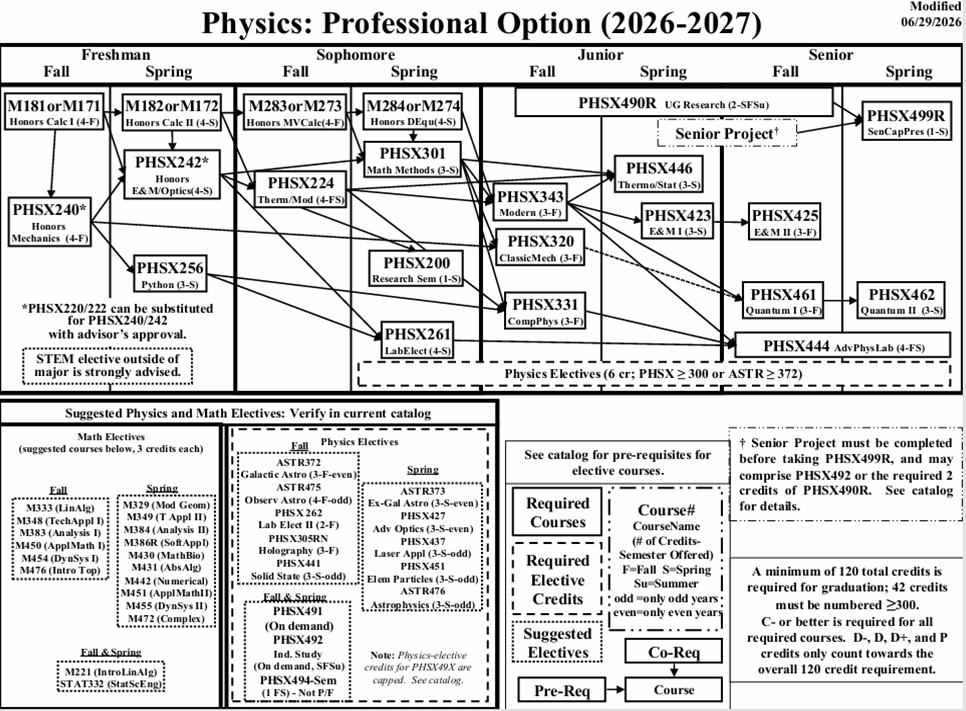
A current flowchart for one of our B.S. options within the department
Changes to the B.S. degree options, beyond the inclusion of PHSX 256 and changes to PHSX 261, 423, and 425:
- Astronomy and Astrophysics: Improvement of flow of the courses in the junior and senior years
- Interdisciplinary: Replacement of Declared Area Courses with any minor that is offered by MSU.
- Professional: Removal of PHSX 262 as a requirement.
- Teaching: Total redesign together with the Education Department to optimize teacher preparedness and remove all unnecessary requirements.
Additional new courses:
- ASTR 120CS: The Sun and Society (Rachael Filwett), an MSU Core course
- PHSX 111CS: The World of Quantum Physics (John Neumeier), an MSU Core Course
- PHSX 491-004: Introduction to Quantum Computing (Hang Yu), an interdisciplinary course available to all STEM students.
- PHSX 317: Instrument Building for Scientists (Tom Jungst), a course that covers machine shop safety and metals fabrication.
Two physics questions from this year's Physics Bowl, held at Columbo's Pizza on April 3rd, 2026
Question 1:
Bose said to Einstein, "List the correct particles".
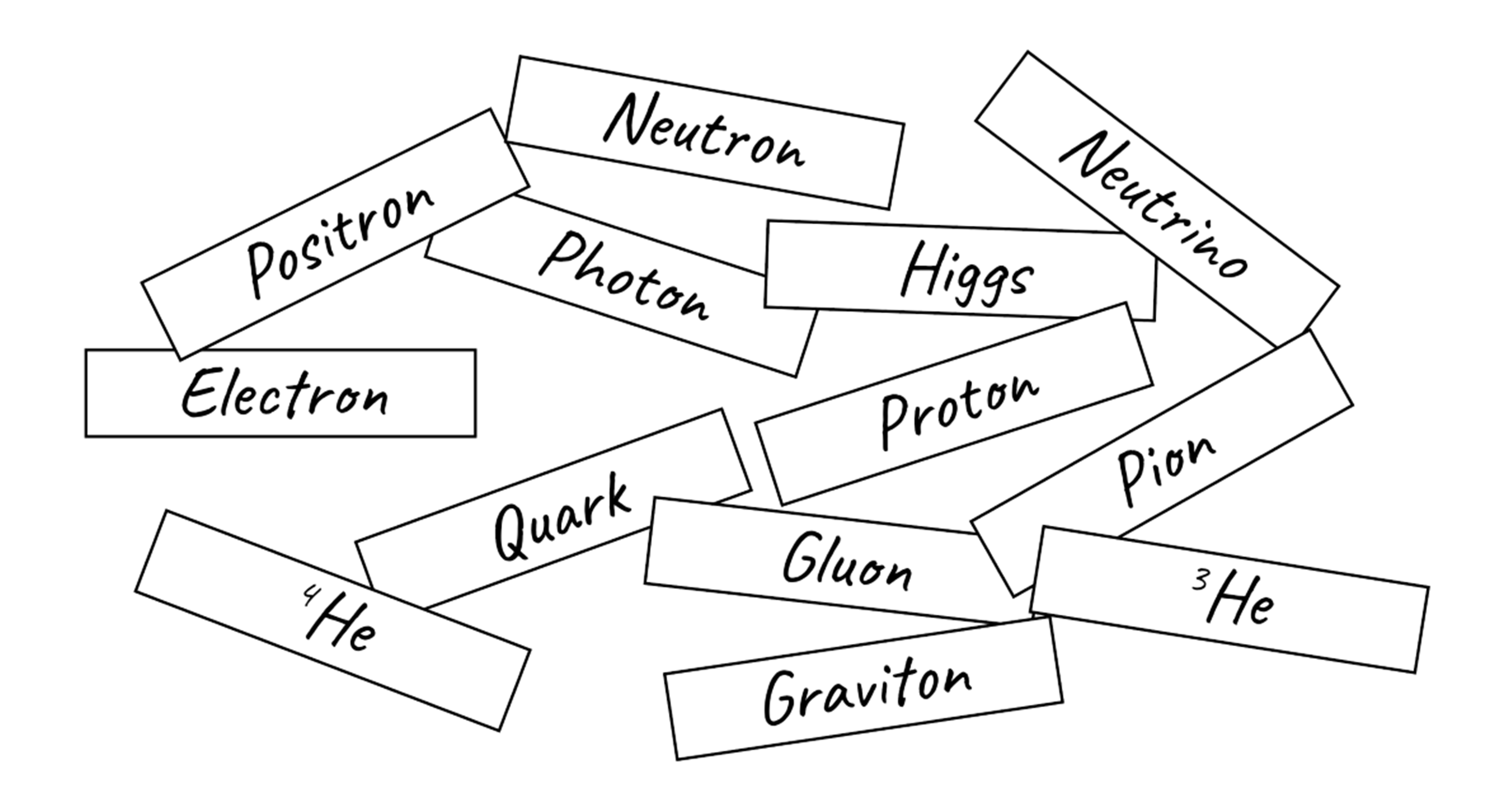
6 bosons: Photon, Higgs, Gluton, Pion, Graviton, He-4
Question 2:
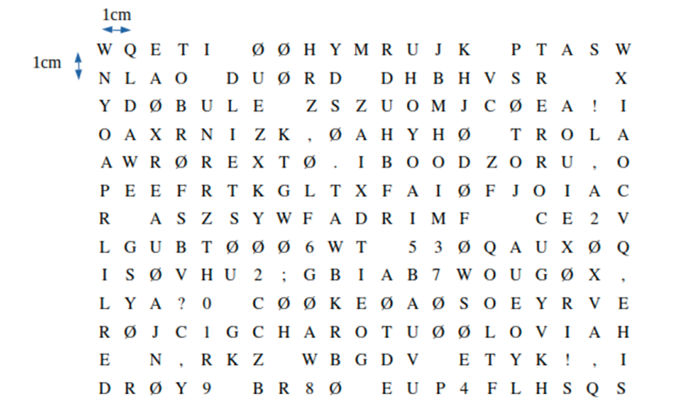
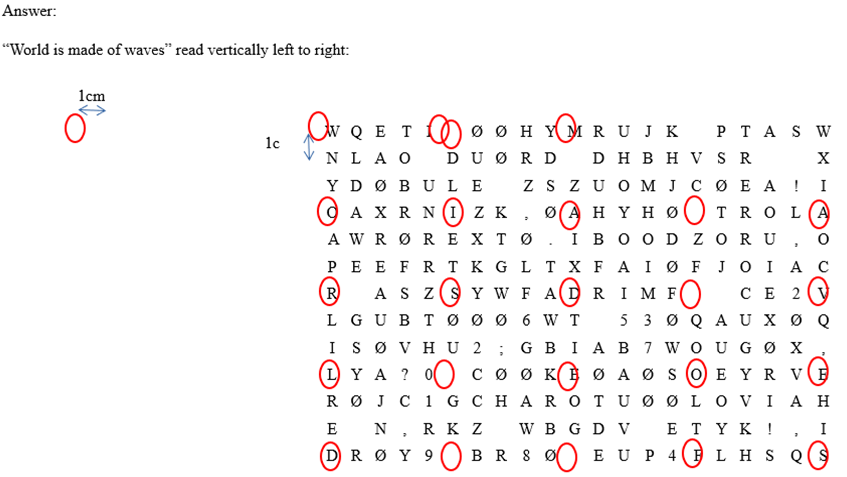
There is a hidden message in the table shown below. In order to read the message you will need to illuminate certain letters using a 2 dimensional diffraction grating, with the vertical slits separated by 12 microns, and horizontal slits separated by 20 microns. The grating is placed 1 meter from the table; assume that the light has a wavelength of 600 nm. Maximum intensity light spot is at the center of the table.